Supplements · Daily Wellness
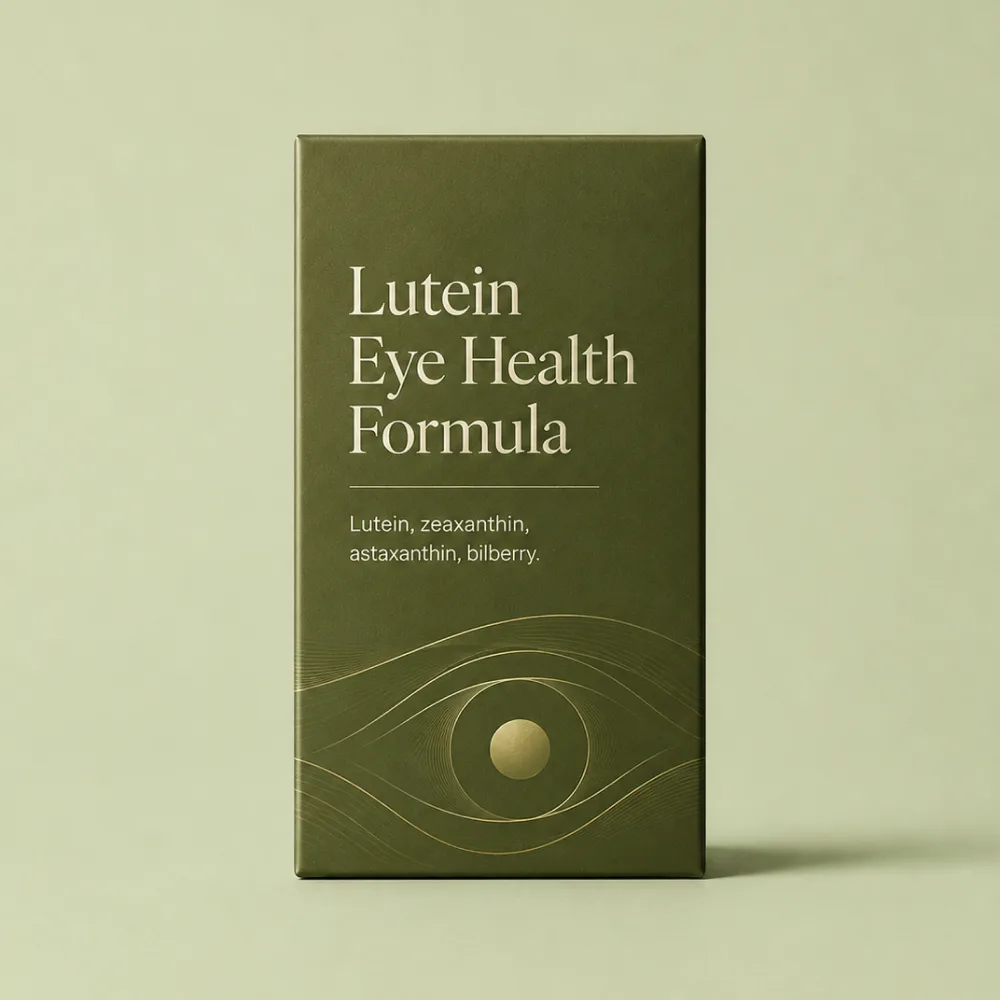
Lutein Eye Health Formula
Screen time turned this from a senior category into an all-ages one, which is why demand keeps expanding. The specification to focus on is the lutein to zeaxanthin ratio, and since carotenoids are fat-soluble, format choice materially affects how much actually absorbs.
Production terms are confirmed directly with the matched manufacturer.
Key ingredient options
Lutein
Marigold-derived carotenoid that concentrates in the macula, the most researched ingredient for eye support.
Zeaxanthin
The partner carotenoid to lutein, and the two are consistently studied and dosed together.
Astaxanthin
A powerful antioxidant carotenoid associated with eye fatigue support in Japanese and Korean research.
Bilberry extract
The traditional European eye botanical, adding consumer familiarity to the formula.
What makes it work
- Screen time drives demand across every age group, which broadens this beyond a purely senior category.
- The lutein and zeaxanthin ratio is the specification that matters, usually following established research ratios.
- Carotenoids are fat-soluble, so softgel formats generally absorb better than dry tablets.
Texture & format
Capsule · Tablet · Gummy
Frequently asked
What lutein dosage is typical?
Research commonly uses 10 to 20 mg of lutein with a proportional amount of zeaxanthin. The ratio between them matters as much as the total, so ask which research the manufacturer's dosage follows.
Which format absorbs best?
Carotenoids are fat-soluble, so softgels with an oil carrier generally outperform dry tablets. If a gummy or powder is preferred for the audience, ask about solubilized or emulsified grades.