Supplements · Daily Wellness
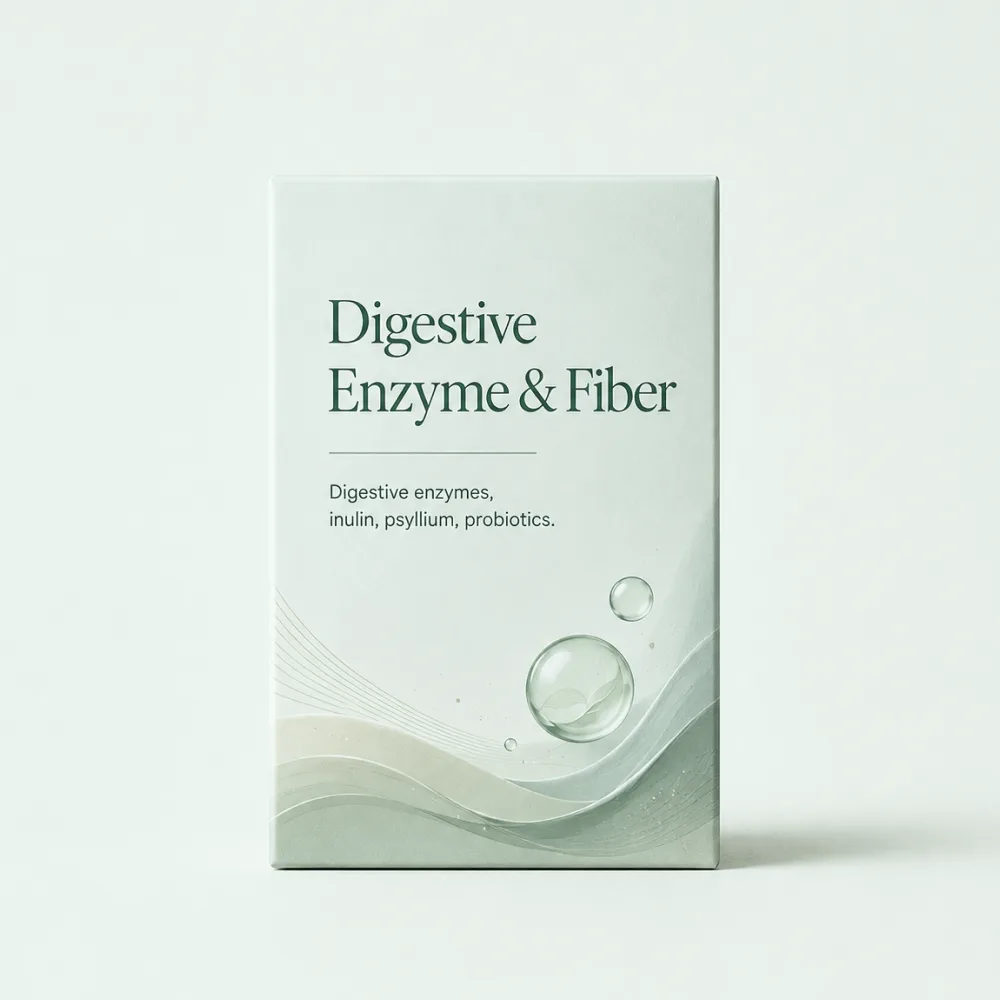
Digestive Enzyme & Fiber Formula
Digestive supplements live or die on texture. The enzyme science is well understood and Korean factories handle it routinely, but fiber doses are large enough that mouthfeel decides whether a customer finishes the first box. That is why jelly sticks and carefully dispersible powders outperform capsules in this category.
Production terms are confirmed directly with the matched manufacturer.
Key ingredient options
Multi-enzyme blend
Amylase, protease and lipase cover the three main food groups, which is the standard base for a broad digestive claim.
Prebiotic fiber
Inulin or resistant dextrin feeds existing gut flora, and pairs naturally with a probiotic line extension.
Psyllium husk
The bulking fiber consumers already recognize for regularity, though it drives texture and dosing decisions.
Lactobacillus blend
An optional probiotic layer that turns a single-purpose enzyme product into a broader gut health position.
What makes it work
- Enzyme activity is measured in units rather than weight, so specifications must state activity levels and not just ingredient quantities.
- Fiber content drives texture heavily, so powder formats need careful work on dispersibility to avoid a gritty mouthfeel.
- Pairs naturally with a probiotic SKU, which is the usual way brands extend a first digestive product into a range.
Texture & format
Powder Stick · Sachet · Capsule · Jelly Stick
Frequently asked
Should enzymes and probiotics be combined in one product?
They can be, and combined gut health products sell well, but stability is the constraint. Probiotic viability must be maintained through shelf life alongside active enzymes, which usually means separate coating or a two-chamber format. Korean manufacturers handle both approaches, and the choice affects packaging and cost.
What formats suit a fiber-heavy formula?
Stick pack powders are the most common, since fiber doses are too large for a practical capsule count. Jelly sticks are the Korean-signature alternative and solve the texture complaint that limits repeat purchase on powders.
How is enzyme strength specified?
By activity units such as FCC, not by milligram weight. Two products with identical milligram declarations can differ substantially in real activity, so the specification should always state units and the testing method behind them.